

If you notice feelings of exhaustion, loss of motivation, or anxiety related to your online activity, you might be experiencing digital burnout. It’s essential to set boundaries, take regular breaks, and engage in offline hobbies to recharge. Recognize the signs early and prioritize self-care to protect your mental health. Creating sustainable habits and seeking support can help you recover and maintain your passion. Keep exploring to discover more ways to manage burnout effectively.
Key Takeaways
- Recognize signs of burnout such as loss of motivation, fatigue, and increased anxiety related to social media activity.
- Set boundaries by scheduling regular digital detoxes and limiting daily social media use to prevent overwhelm.
- Engage in offline hobbies and quality time with loved ones to recharge mental and emotional health.
- Develop flexible content strategies and pause or delete content when feeling overwhelmed.
- Prioritize self-care and seek support from peers or professionals to maintain mental well-being.
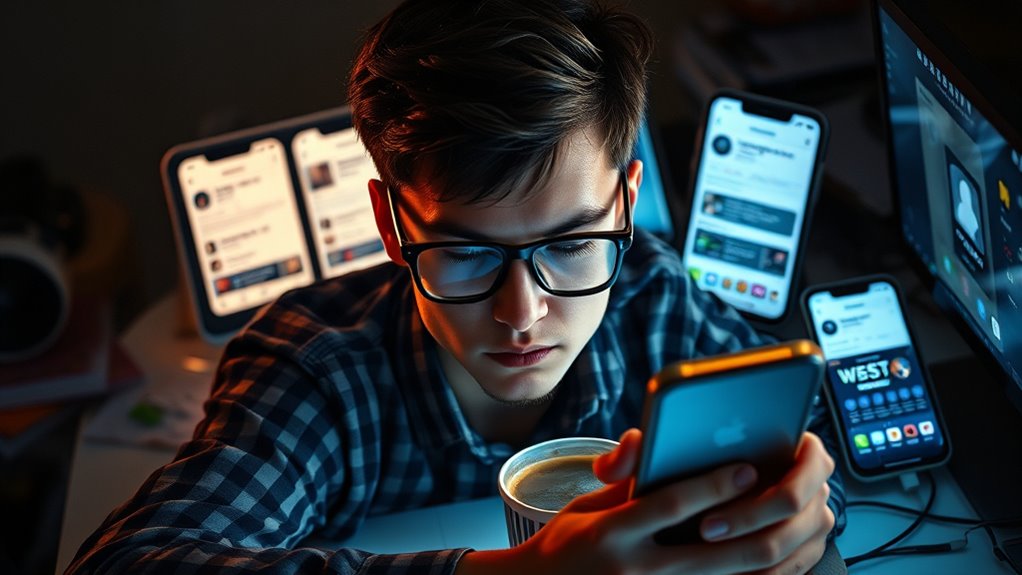
In today’s increasingly connected world, digital burnout has become a common challenge for many. As an influencer, you constantly juggle the pressure to produce engaging content while maintaining your online presence. This relentless cycle can lead to social media fatigue, where scrolling, posting, and engaging with followers start feeling overwhelming rather than rewarding. You might notice yourself feeling drained after hours of creating content or checking notifications, and those feelings of stress can quickly spiral into content creator stress, where your passion for sharing diminishes under the weight of expectations. It’s easy to get caught in this cycle, especially when your online identity becomes intertwined with your self-worth.
You may find yourself stuck in a loop of comparing your performance to others or feeling anxious about the next post, which only heightens your social media fatigue. The constant need to stay relevant and respond promptly to comments or messages can drain your mental energy. Over time, this stress can lead to burnout, making it hard to find joy in what once excited you. You might start questioning whether your efforts are worth the toll they take on your mental health. This is a clear sign that you need to step back and reassess your digital habits. Recognizing the signs of burnout is vital. If you’re feeling disconnected from your content, losing motivation, or experiencing heightened anxiety, it’s time to prioritize your wellbeing. Acknowledge that you don’t have to be online 24/7 to succeed. Setting boundaries around your screen time, such as designated days without posting or limiting your time on social media platforms, can make a significant difference. Remember, taking breaks isn’t a sign of weakness—it’s a necessary step to recharge your mental and emotional health. Engage in offline activities that bring you joy, whether that’s spending time with loved ones, pursuing hobbies, or simply resting. Incorporating mental health awareness into your routine can help you recognize early signs of burnout and seek support when needed. Recovering from digital burnout involves creating sustainable routines that protect your mental health. Consider implementing a content calendar that allows for more flexibility, and don’t be afraid to pause or delete content when needed. Reach out for support, whether from fellow influencers, friends, or mental health professionals, who can help you navigate the emotional toll of social media. Ultimately, your mental health should always come first. By setting clear boundaries, practicing self-care, and recognizing the signs early, you can recover from social media fatigue and content creator stress, ensuring your passion for influencing remains a positive and fulfilling part of your life.
Frequently Asked Questions
How Does Digital Burnout Differ From Traditional Burnout?
Digital burnout differs from traditional burnout because it often stems from constant social comparison and content fatigue. You might feel overwhelmed by nonstop notifications, comparing yourself to influencers, or exhausted from endless scrolling. Unlike traditional burnout, which relates to work stress, digital burnout is fueled by the digital environment’s relentless demands, making it harder to disconnect. Recognizing these signs helps you take steps to recover and regain balance.
Can Digital Burnout Affect Mental Health Long-Term?
You might wonder if digital burnout can impact your mental health long-term. It can, by draining your emotional resilience and increasing stress, anxiety, or depression over time. To protect yourself, consider regular digital detoxes and setting boundaries with online activities. These steps help rebuild your emotional strength, prevent burnout from becoming chronic, and promote overall mental well-being, ensuring you stay resilient both online and offline.
What Role Do Algorithms Play in Influencer Burnout?
Algorithms heavily influence influencer burnout by constantly pushing you to create engaging content, leading to increased content fatigue. The algorithm’s focus on engagement metrics pressures you to produce more, often sacrificing your well-being. This relentless cycle makes it hard to step back, fueling exhaustion and stress. Ultimately, algorithm influence markedly contributes to burnout by prioritizing algorithms over your mental health, making it essential to recognize and manage this impact.
Are There Specific Signs Unique to Influencers Experiencing Burnout?
Did you know that 60% of influencers report feeling overwhelmed? You might notice signs like content fatigue, where creating or posting feels draining, and engagement decline, with fewer likes or comments than usual. These signs are unique indicators of burnout, showing you’re emotionally and mentally exhausted. If you experience these, it’s a clear signal to take a break and prioritize self-care before burnout worsens.
How Can Brands Support Influencers Facing Digital Burnout?
You can support influencers facing digital burnout by adjusting your brand collaboration approach. Offer flexible deadlines and reduce posting expectations to ease their workload. Encourage authentic content that resonates with their genuine voice, which can boost audience engagement without overwhelming them. Showing understanding and prioritizing quality over quantity helps prevent burnout, fostering a healthier relationship between your brand and the influencer, ultimately benefiting both parties and maintaining a positive brand image.
Conclusion
As you close your device, remember that digital burnout is like a fading lighthouse beam—once bright but now dimming. Reclaim your inner glow by setting boundaries and reconnecting with the real world. The digital sea may call, but you hold the compass to navigate back to balance. Your well-being is the lighthouse’s steady beam, guiding you away from exhaustion and toward clarity. Shine brightly, beyond the screens, and find your true north.