If you want the best image quality and low-light performance, a full frame sensor is worth the investment, especially for professional or serious photography. It captures more light, offers better detail, and provides a wider dynamic range, but it comes with a higher price and larger size. If you’re on a budget or prefer a lighter, more portable choice, APS-C cameras still deliver great results for casual, travel, or hobbyist shooting. To find out which suits your needs best, keep exploring.
Key Takeaways
- Full frame sensors deliver superior image quality, better low-light performance, and greater dynamic range, making them worth the investment for professional use.
- APS-C sensors are more affordable, lightweight, and portable, ideal for beginners, casual shooters, and travel photography.
- The higher cost of full frame cameras includes lenses and accessories, which may not be justified for casual or hobbyist photographers.
- For advanced photographers needing depth of field control and low-light capabilities, full frame provides significant advantages.
- Beginners and budget-conscious users often find APS-C sensors offer excellent value with sufficient quality for most photography needs.
What Are Full Frame and APS-C Sensors, and How Do They Differ?

Full frame and APS-C sensors are two common types of camera sensors that determine the size of your camera’s image sensor. Sensor manufacturing influences both, with full frame sensors being larger and requiring more precise production. This size difference affects pixel density, meaning full frame sensors often have fewer pixels packed into a larger area, which can improve image quality. Conversely, APS-C sensors are smaller, allowing for higher pixel density, which can make cameras more compact and affordable. The sensor size impacts how much light each sensor captures, but not directly the pixel density, which is a key factor in image detail and noise. Additionally, sensor size differences can influence your lens choices and overall camera setup. Understanding the manufacturing process and how it relates to sensor performance can help photographers select the right camera for their specific needs, especially considering how sensor size impacts the overall imaging capabilities. Recognizing the impact on image quality is essential for making an informed decision.
How Do Image Quality and Low-Light Performance Compare?

Because of their larger size, full frame sensors generally deliver better image quality and low-light performance compared to APS-C sensors. They capture more light, resulting in images with richer detail, smoother tones, and less noise in dim conditions. This improved performance is especially noticeable when shooting at higher ISO settings. Additionally, full frame sensors tend to have more durable design features, contributing to overall sensor durability over time. Sensor size plays a crucial role in overall image performance and quality. Furthermore, advancements in sensor technology continue to enhance the capabilities of full frame cameras, making them increasingly reliable in various shooting scenarios. While larger sensors typically consume more power, advancements in technology help maintain decent battery life even during extended low-light shooting. As a result, full frame cameras often provide more consistent image quality and reliability in challenging lighting situations, making them a preferred choice for photographers seeking superior results in varied environments.
How Does Sensor Size Affect Camera Cost and Budget Options?

Larger sensors, like full frame, generally drive up the cost of cameras because they require more advanced manufacturing and higher-quality components. This increased complexity impacts your budget in several ways:
- Sensor manufacturing: Producing bigger sensors demands precision, raising production costs that are reflected in the camera’s price. Manufacturing complexity of larger sensors also plays a role, as it influences both production time and quality control, further impacting the overall cost.
- Camera body design: Full frame cameras often feature sturdier, more durable bodies, adding to manufacturing expenses.
- Warranty coverage: Higher-end sensors may come with more extensive warranty options, but initial costs tend to be steeper.
- Additional factors: The size of the sensor can also affect the cost of accessories, such as lenses, which tend to be larger and more expensive for full frame systems. Additionally, the sensor size influences the selection and cost of compatible lenses, impacting your overall investment.
Consequently, full frame cameras often have higher retail prices and potentially more expensive repair or replacement costs, influencing your overall budget and long-term investment.
Which Sensor Size Is More Versatile for Different Photography Styles?
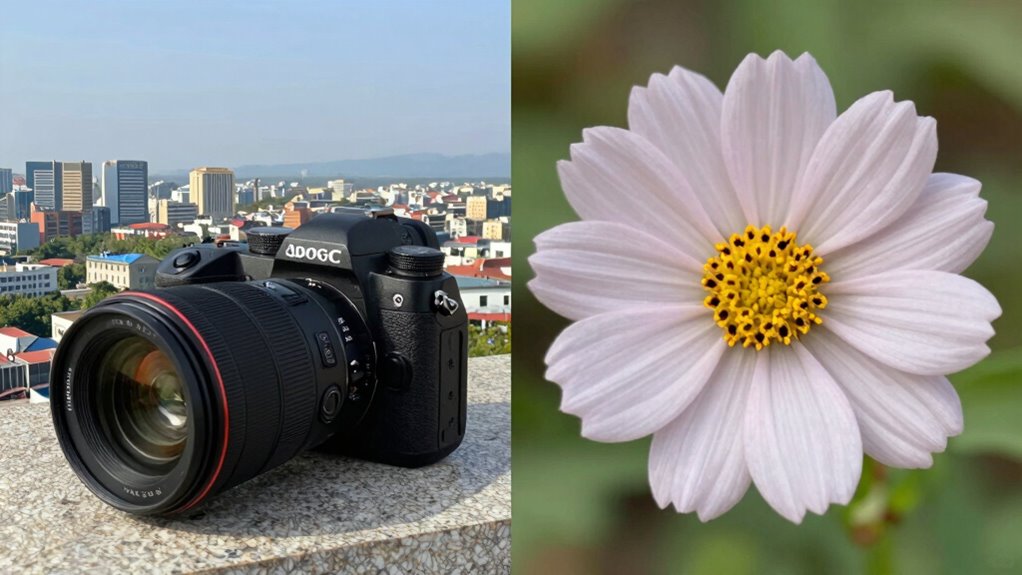
Choosing the right sensor size depends largely on the types of photography you pursue, as each offers distinct advantages in different shooting scenarios. Full frame sensors provide better sensor flexibility and higher creative potential, especially in low-light conditions, making them ideal for portraits, landscapes, and fine art. APS-C sensors excel in versatility for travel, wildlife, and casual photography due to their smaller size and lighter weight. They also offer more cropping options, giving you extra creative potential in framing shots. Here’s a quick comparison: Sensor Size impacts your camera’s overall performance and suitability for various styles. Additionally, the history of pinball machines illustrates how technological innovations can significantly influence entertainment options, much like how sensor advancements have shaped modern photography. Understanding how technology evolution influences equipment choices can help photographers select gear that best matches their evolving needs.
How Do Size and Weight Impact Your Shooting Experience?
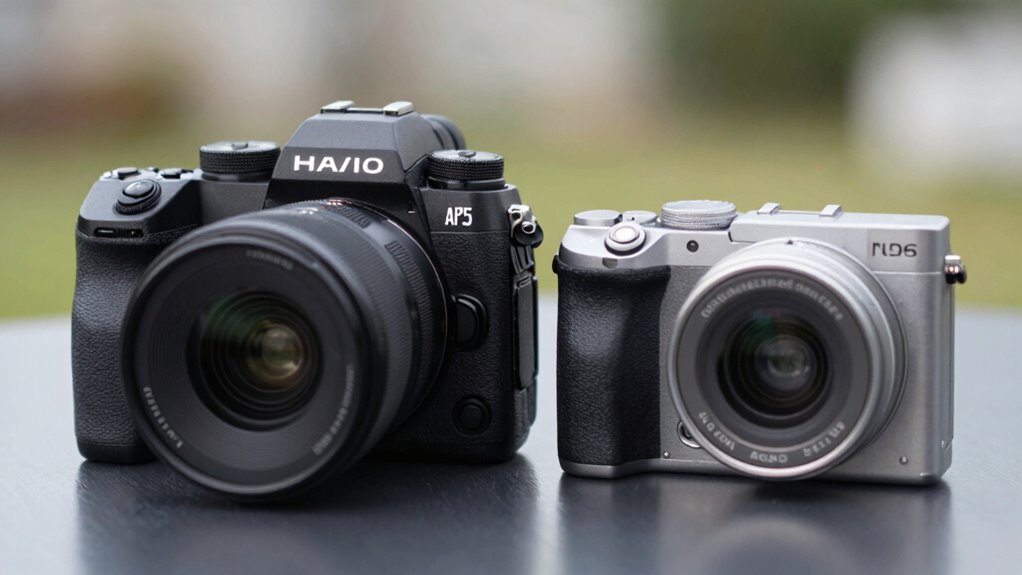
The size and weight of your camera gear can considerably influence how comfortably and efficiently you shoot throughout the day. Heavier cameras may cause fatigue, impacting your sensor ergonomics and grip comfort. When choosing between full frame and APS-C, consider:
- How long you’ll shoot—lighter gear helps avoid fatigue during extended sessions.
- Maneuverability—compact bodies allow easier navigation in tight spaces.
- Stability—smaller cameras often require steadier hands or tripods to prevent shake.
A well-designed grip enhances grip comfort, especially with smaller cameras, but may feel less stable if too lightweight. Sensor ergonomics also play a role: a balanced camera reduces strain, making your shooting experience more enjoyable. Additionally, sensor size can influence your overall imaging quality and depth of field, which are crucial factors in portrait photography. Understanding the impact of weight and size on your shooting style can help you select equipment that complements your workflow. For example, a lighter setup can provide greater freedom of movement and reduce fatigue during long shoots. Considering ergonomic design features can further improve handling and comfort. Ultimately, the right size and weight improve your efficiency and comfort, enabling you to focus on capturing great shots.
Is Full Frame Better for Low-Light Photography?
Full frame sensors generally handle noise better in low-light conditions, giving you cleaner images at higher ISO settings. They also offer lens compatibility advantages, allowing you to use a wider range of high-quality lenses that enhance your low-light performance. Considering these factors can help you decide if a full frame camera is the right choice for your low-light photography needs. Additionally, sensor size plays a significant role in overall image quality, especially in challenging lighting environments. Larger sensors often support luxury quality glass and accessories that further improve low-light results. Moreover, understanding the flushing mechanisms can inspire you to choose equipment that maximizes efficiency and performance in various conditions. For instance, the right yarn for scarves can influence the overall look and feel of your photographs by providing unique textures and depth in your compositions.
Noise Performance Comparison
Ever wonder if a full-frame sensor truly outperforms an APS-C when it comes to noise in low-light situations? The answer depends on factors like sensor manufacturing and pixel density. Full-frame sensors generally have larger pixels, allowing more light to be captured, which reduces noise. Compare this to APS-C sensors with higher pixel density, meaning more pixels packed into a smaller area, often increasing noise at higher ISO settings. Additionally, sensor manufacturing techniques play a crucial role in minimizing noise artifacts and enhancing overall image quality. Techniques like sensor fabrication can significantly impact noise reduction and image clarity across different sensor types. Moreover, advancements in noise reduction technology continue to improve performance for both sensor sizes, narrowing the gap in low-light conditions.
Lens Compatibility Benefits
Choosing the right camera system can particularly impact your low-light photography, especially when it comes to lens compatibility. Full-frame cameras typically offer broader lens options designed specifically for their larger sensors, enhancing image quality in dim conditions. This compatibility often means you can select lenses with wider apertures, allowing more light to reach the sensor. Additionally, full-frame cameras tend to have better sensor durability, which supports long exposure shots without compromising performance. APS-C systems, while compatible with many lenses, may have limited options optimized for low-light scenarios. Your lens compatibility choices influence your ability to adapt to different lighting conditions and achieve sharp, bright images. Overall, a full-frame system’s lens compatibility and sensor durability can give you a notable advantage in challenging low-light environments.
What Key Factors Should You Consider When Choosing Between Full Frame and APS-C?

When deciding between a full frame and an APS-C sensor, you need to take into account several key factors that directly impact your photography experience. First, consider sensor durability; a more robust sensor can withstand tough conditions, extending your camera’s lifespan. Second, evaluate camera ergonomics—how comfortably the camera fits in your hands and how intuitive it feels during shoots. Third, think about your typical shooting scenarios:
- Wide landscapes or portraits benefit from full frame’s superior image quality.
- Compactness and lighter weight are advantages of APS-C, ideal for travel.
- Budget constraints influence long-term value, especially since full frame cameras often cost more upfront.
Balancing these factors helps guarantee you select a sensor that aligns with your style and needs.
Is Full Frame or APS-C the Better Value for Beginners and Enthusiasts?

When weighing the value of full frame versus APS-C, your budget and what you want to achieve play big roles. Full frame cameras offer better image quality and performance, but they come at a higher cost. If you’re starting out or want to save money, APS-C can give you great results without breaking the bank. Additionally, considering current wall art trends can help you decide which camera setup aligns best with your creative goals.
Cost and Budget Considerations
For beginners and enthusiasts working within a budget, the cost difference between full-frame and APS-C cameras can be a decisive factor. Full-frame models often come with higher initial prices, but they may offer better sensor durability due to advanced manufacturing processes, potentially lasting longer with proper care. To visualize the costs:
- Camera Body – Full-frame cameras can cost twice as much as APS-C models.
- Lenses – Higher-quality lenses for full-frame are pricier, impacting your overall budget.
- Accessories – Extra batteries and memory cards for full-frame setups tend to be more expensive.
While APS-C cameras are more budget-friendly upfront, consider long-term expenses and durability. Your choice depends on balancing initial costs with potential ongoing investment needs.
Image Quality and Performance
While budget considerations influence your initial investment, evaluating image quality and performance helps determine long-term value. Full frame sensors generally excel in sensor manufacturing, offering better light sensitivity and dynamic range, which results in sharper images with richer colors. APS-C sensors, however, have improved markedly through advancements in image processing, narrowing the gap in overall quality. For beginners, APS-C cameras provide impressive results at a lower cost, while enthusiasts may prefer full frame for its superior low-light performance and finer detail. Ultimately, your choice depends on your photography goals, but both sensor sizes can produce excellent images when paired with quality lenses and effective image processing. Consider how each sensor’s strengths align with your shooting style to make the best long-term investment.
Frequently Asked Questions
How Does Sensor Size Influence Autofocus Performance and Speed?
Sensor size directly influences autofocus speed and performance. Larger sensors, like full frame, often have better light gathering, reducing sensor noise, which helps autofocus systems operate more smoothly and quickly. Smaller sensors, like APS-C, might have slightly slower autofocus due to increased sensor noise in low light. Overall, bigger sensors typically deliver faster autofocus performance, especially in challenging lighting, making them preferable for quick, precise shots.
Are Lens Options More Limited for APS-C Cameras?
They say “you get what you pay for,” but when it comes to APS-C cameras, lens options aren’t necessarily limited. You’ll find a wide range of compatible lenses, especially from major brands, offering great image quality. However, lens compatibility can vary, so double-check mounts. While full-frame cameras have more high-end options, APS-C lenses are often more affordable and lighter, making them ideal for versatile, quality images without sacrificing variety.
How Does Crop Factor Affect Framing and Composition?
Crop factor influences your framing and composition by effectively zooming in on your subject, making it appear closer. This means you might need a wider lens to achieve the same framing as a full-frame camera. Keep in mind, smaller sensors like APS-C may have lower sensor resolution, affecting image detail, and can introduce more image noise in low-light conditions. Adjust your lens choices accordingly to optimize your shots.
What Are the Maintenance and Durability Differences Between Sensor Types?
You’ll find that full-frame sensors generally have better durability and dust resistance, making sensor cleaning less frequent and easier when needed. APS-C sensors, being smaller, can attract more dust, requiring regular sensor cleaning to maintain image quality. Both sensor types benefit from good protective features, but full-frame cameras tend to withstand rougher conditions better. Proper maintenance, like gentle sensor cleaning, helps extend your camera’s lifespan regardless of sensor size.
Can Firmware Updates Improve Sensor Performance Over Time?
Sure, firmware updates can boost sensor longevity and enhance performance, but don’t expect them to turn your sensor into a superhero. While they improve image processing and noise reduction, they won’t fix physical wear or hardware issues. Think of firmware as a software facelift—nice, but it doesn’t replace the need for good maintenance or hardware upgrades. So, yes, they help, but don’t rely solely on them for longevity.
Conclusion
Choosing between full frame and APS-C boils down to your needs, budget, and shooting style. Don’t put all your eggs in one basket—consider what matters most for you, whether it’s image quality, versatility, or portability. Remember, it’s not always about having the biggest or the best, but about making the right choice for your photography journey. Sometimes, it’s the little things that make all the difference in the end.