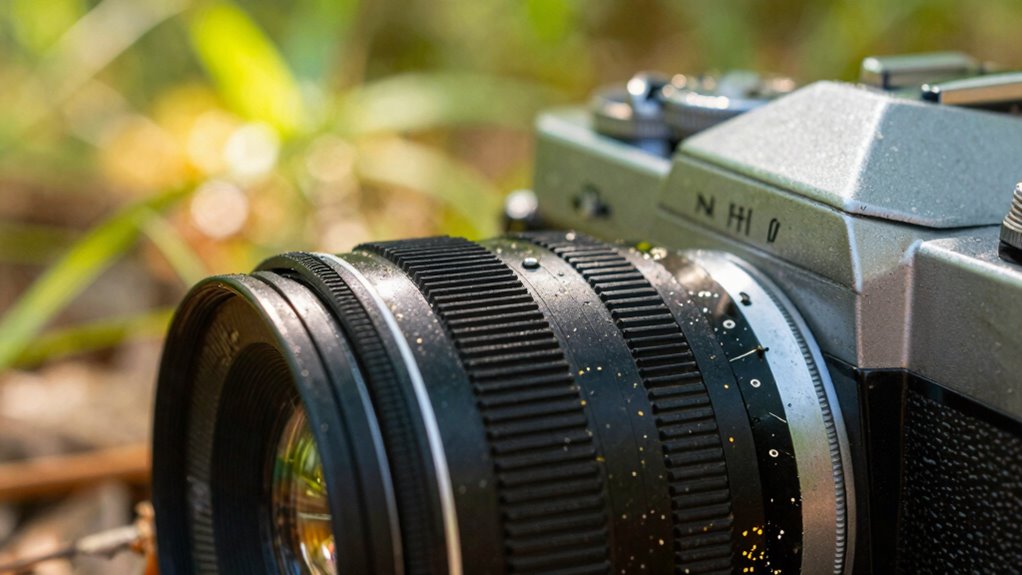

Manual focus isn’t dead because it gives you precise control in difficult conditions where autofocus often struggles—like low light, reflective surfaces, or fast-moving scenes. It’s vital for close-up macro work and portraits, letting you target specific details. Proper calibration guarantees your lens stays accurate, especially with older or cheaper models. If you want sharper images and better control in tough shots, understanding when to use manual focus can really boost your results. Keep exploring to see how it can work for you.

Get the latest gadgets delivered free with Prime
- Fast, free delivery on millions of items
- Prime Video, Amazon Music and more included
- Member-only deals all year
Key Takeaways
- Manual focus offers precise control in challenging lighting or complex scenes where autofocus may fail.
- It is essential for macro and portrait photography, ensuring critical sharpness on specific subjects.
- Manual focus combined with lens calibration improves accuracy, especially with older or misaligned lenses.
- During fast-paced or reflective surface shooting, manual focus helps achieve sharper images when autofocus struggles.
- Manual focus allows deliberate focusing on desired elements, avoiding distractions or autofocus misfocus.
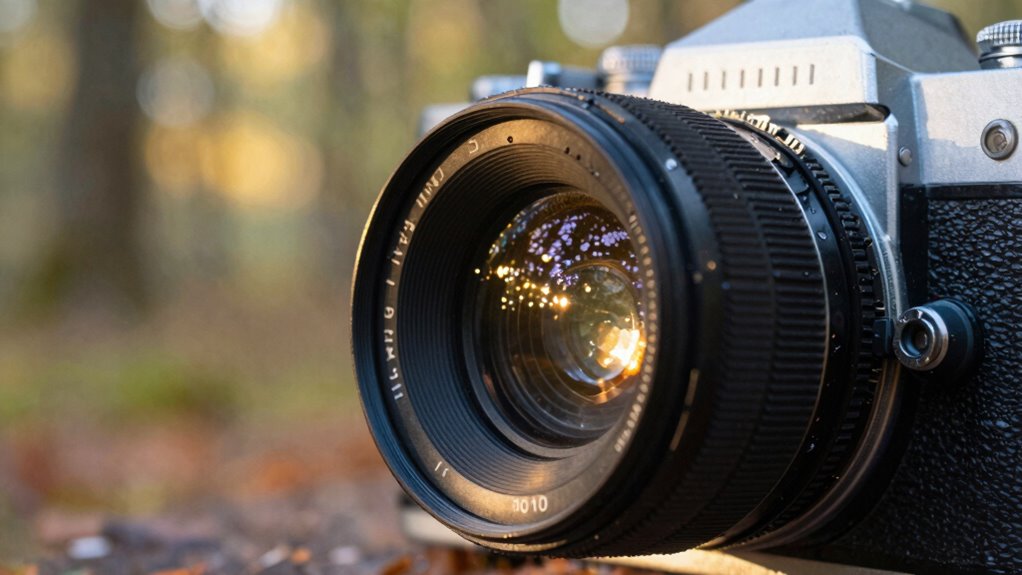
Despite the rise of autofocus technology, manual focus still has an essential place in photography. While modern cameras and lenses boast impressive autofocus systems, they aren’t foolproof. Autofocus limitations can become apparent in tricky situations, such as low-light conditions, complex scenes, or when shooting through obstacles like glass or fences. In these moments, relying solely on autofocus can lead to missed shots or slightly out-of-focus images. That’s where manual focus remains invaluable. It gives you precise control over what’s sharp in your frame, especially when autofocus struggles or isn’t available.
Manual focus offers crucial precision when autofocus falters in challenging shooting conditions.
One key aspect of maintaining sharpness with manual focus is lens calibration. Even the best lenses can sometimes fall out of alignment, which means the autofocus system may not be accurately focusing on the intended subject. Lens calibration allows you to fine-tune your lens to guarantee it’s focusing exactly where you want it to. When you’re manually focusing, calibration ensures that what you see through the viewfinder or on the screen matches the actual focus point. This precision becomes essential in genres like macro or portrait photography, where even a slight focus error can ruin an image. Proper lens calibration minimizes guesswork, making manual focus a more reliable tool in your kit.
While autofocus has come a long way, it still has its limitations, especially in creative or challenging scenarios. For instance, when shooting through reflective surfaces, autofocus can be fooled by the wrong elements, resulting in blurry or misfocused images. In such cases, switching to manual focus allows you to selectively focus on the subject you want, ignoring distracting backgrounds or reflections. Additionally, during fast-paced events like sports or wildlife photography, you might find that autofocus isn’t quick enough to keep up, especially if the subject moves erratically. Here, manual focus can be used to pre-focus on a specific spot, giving you more control over the timing of your shot. Recognizing autofocus limitations and knowing when to switch to manual focus can make a significant difference in capturing sharp images in challenging conditions. Also, understanding lens calibration helps you ensure that your manual focus is as accurate as possible, especially when working with older or less expensive lenses that may not focus perfectly out of the box.
As an affiliate, we earn on qualifying purchases.
Frequently Asked Questions
How Do I Start Practicing Manual Focus Effectively?
Start practicing manual focus by first calibrating your lens for accurate results. Use lens calibration tools or settings to guarantee sharp images. Next, enable focus peaking on your camera to highlight in-focus areas, making manual focusing easier. Practice on static subjects, zoom in to check focus, and gradually challenge yourself with moving subjects. Regular practice with these tools will improve your precision and confidence in manual focusing.
What Are the Best Cameras for Manual Focusing?
You should choose cameras with easy lens calibration and focus peaking features for manual focusing. Mirrorless cameras like Sony Alpha series and Fujifilm X-series excel because they offer precise focus adjustments and helpful focus peaking overlays. These tools make manual focus faster and more accurate, especially for close-up or low-light shots. Investing in such a camera guarantees you get sharp images and enhances your overall manual focusing experience.
How Does Manual Focus Compare to Autofocus in Low Light?
In low light, manual focus often outperforms autofocus, which has limitations in dim conditions—studies show autofocus struggles in about 30% of low-light shots. You can fine-tune focus precisely with manual control, avoiding missed shots caused by auto focus limitations. While autofocus is quick in good light, manual focus gives you better accuracy and control when facing low light challenges, making it essential for detailed, sharp images in dim environments.
Can Manual Focus Improve Image Quality in Certain Situations?
Manual focus can improve your image quality in tricky situations, especially with lens coatings that reduce flare and ghosting. By using focus peaking, you get a clear visual cue, making precise adjustments easier. This control allows for sharper details, better exposure, and ideal depth of field, particularly in macro or portrait shots. So, in challenging lighting or specific creative needs, manual focus gives you the edge to produce high-quality images.
What Accessories Help Enhance Manual Focusing Accuracy?
Manual focus is like tuning a fine instrument, and accessories can sharpen your skills. Lens calibration guarantees your lens focuses precisely, reducing errors. Focus peaking highlights the sharpest edges, making it easier to see when your focus is perfect. Using these tools together, you boost accuracy and confidence, especially in challenging shots. These accessories turn manual focus from a guessing game into a precise, reliable technique.
As an affiliate, we earn on qualifying purchases.
Conclusion
Remember, manual focus isn’t just a tool; it’s your brushstroke on a canvas of light and shadow. When you dial in that perfect focus, you’re carving out a moment with precision, like holding a fragile butterfly in your palm. In these quiet, deliberate moments, you reclaim the art of seeing clearly, even when the world blurs around you. Sometimes, the best shot isn’t the easiest—it’s the one you focus on with intention.
As an affiliate, we earn on qualifying purchases.
portrait photography manual focus
As an affiliate, we earn on qualifying purchases.
As an affiliate, we earn on qualifying purchases.
Columbus Day / Indigenous Peoples' Day Picks
long weekend sales
As an affiliate, we earn on qualifying purchases.