Sensor size often confuses even smart buyers because it impacts image quality, lens options, camera size, and cost—all intertwined factors. Larger sensors usually mean better low-light photos and more advanced features, but they also generally lead to bigger, pricier gear. Smaller sensors are more portable and affordable but may sacrifice some quality. With so many variables, understanding how sensor size influences your choices can be tricky, but you’ll discover key insights if you keep exploring.

Get the latest gadgets delivered free with Prime
- Fast, free delivery on millions of items
- Prime Video, Amazon Music and more included
- Member-only deals all year
Key Takeaways
- Sensor size affects image quality, noise performance, and low-light capabilities, making comparisons complex for buyers.
- Different sensor sizes require specific lenses and focal lengths, adding to confusion over compatibility and coverage.
- Variations in stabilization and features across sensor sizes influence performance perceptions and decision-making.
- Camera size, weight, and cost are influenced by sensor size, complicating choices based on portability versus quality.
- Ongoing technological improvements blur the distinctions, making it harder for buyers to choose the optimal sensor size confidently.
When shopping for a new camera, you might find yourself overwhelmed by the various sensor sizes and how they impact image quality. It’s easy to get caught up in technical specs, but understanding how sensor size influences your photos can be tricky. Larger sensors generally produce better image quality, especially in low light, but that doesn’t mean smaller sensors don’t have their place. The key lies in how you plan to use the camera and what features matter most to you.
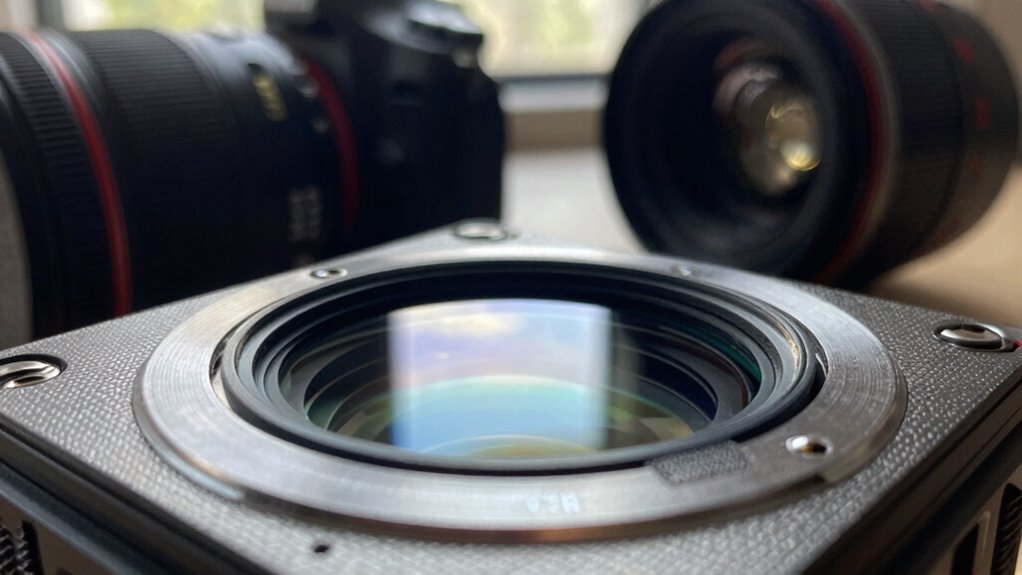
One factor that often confuses buyers is lens compatibility. Different sensor sizes require different lens mounts and focal lengths to achieve the same framing. For example, a lens designed for a full-frame sensor will have a different field of view on a crop sensor. This means you need to consider not just the sensor size but also whether your lenses will work seamlessly with your camera body. Some systems offer extensive lens selections, making it easier to adapt and expand, while others might limit your options. Understanding this helps you avoid the frustration of investing in lenses that don’t fit or don’t provide the coverage you expect.
Lens compatibility varies with sensor size, affecting field of view and system expansion options.
Image stabilization is another element that adds to the complexity. Larger sensors tend to handle camera shake better, especially when paired with good stabilization systems. Whether in-body or lens-based, image stabilization allows you to shoot at slower shutter speeds without blurring your photos. But the level of stabilization effectiveness can vary based on sensor size and camera design. Smaller sensors, especially in compact cameras or smartphones, often rely heavily on digital stabilization or software corrections, which can sometimes compromise image quality. When choosing a sensor size, think about how important stabilized images are for your photography style. If you shoot handheld in low light or at slow shutter speeds, opting for a system with robust image stabilization can make a noticeable difference. Additionally, sensor size influences the overall design and ergonomics of the camera, which can affect handling and comfort during extended shoots. The cost of larger sensors can also be a consideration, as larger sensors and their associated lenses often come with a higher price tag. Furthermore, sensor technology continues to improve, enabling smaller sensors to deliver better results than in the past, which can influence your decision depending on your budget and needs.
Sensor size also influences the overall size and weight of the camera and lenses. Smaller sensors mean more compact gear, which appeals if portability is your priority. But this can sometimes mean sacrificing certain features like advanced image stabilization or a broader lens ecosystem. Conversely, larger sensors often come with bulkier bodies and lenses, but they deliver superior image quality and versatility in challenging conditions. Understanding sensor size can help you make smarter decisions about the gear that best suits your needs.
Products Worth Considering

Amazon Kindle Paperwhite Signature Edition (12th Generation, 2024), 32 GB, Metallic Black

DJI Osmo Mobile 8 Phone Gimbal with Mic Mini Transmitter, Infinity Black

Samsung 27-Inch Odyssey QD-OLED G8 4K 240Hz Gaming Monitor
As an affiliate, we earn on qualifying purchases.
Frequently Asked Questions
How Does Sensor Size Affect Low-Light Performance?
Sensor size directly impacts low-light performance because larger sensors have more sensor technology that improves light sensitivity. When you shoot in dim conditions, a bigger sensor captures more light, resulting in brighter, clearer images with less noise. Smaller sensors struggle in low light because they have less surface area for light collection. So, choosing a camera with a larger sensor enhances your ability to take good photos in challenging lighting.
Is Larger Sensor Always Better for Image Quality?
Larger sensors aren’t always better, like bigger isn’t always brighter. While they often deliver improved image quality, they come with higher sensor costs and can be more fragile, affecting durability. A smaller sensor might be more practical for everyday use, offering good quality without the extra expense or vulnerability. Ultimately, choosing depends on your photography needs, balancing sensor size with budget, durability, and desired image results.
How Does Sensor Size Influence Camera Weight and Portability?
Sensor size directly impacts camera weight and portability; larger sensors generally mean bigger, heavier cameras. This affects camera ergonomics, making handheld shooting less comfortable and reducing ease of transport. If you prioritize compactness and convenience, smaller sensors are advantageous. However, larger sensors often improve image quality, but they do require sacrificing some portability. Consider your shooting needs carefully to balance sensor size with camera ergonomics for the best fit.
Do Different Sensor Sizes Require Different Lenses?
Yes, different sensor sizes often require different lenses due to sensor compatibility, which impacts lens mount types. Smaller sensors generally use compact lenses, making them more versatile and easier to carry. Larger sensors need specialized lenses, offering greater lens versatility for professional photography. When choosing a camera, consider how sensor size influences lens options, ensuring you select a system with the right lens compatibility for your style and needs.
Can Smaller Sensors Produce Professional-Grade Images?
Smaller sensors are like tiny canvases—capable of producing stunning, professional-grade images when filled with skill and creativity. While they may lack some sensor durability and have cost implications for high-end models, advancements in technology have leveled the playing field. You can achieve remarkable results, especially with the right lenses and technique. So, yes, smaller sensors can absolutely deliver professional-quality images in skilled hands.
Conclusion
So, don’t let sensor size turn you into a digital damsel in distress. Remember, even in a world of pixel-perfect images, it’s your eye and creativity that truly capture the moment. Think of sensor size as the size of a ship—bigger isn’t always better, but it can steer you through rough waters more smoothly. Keep learning, experiment freely, and soon you’ll navigate photography’s waters with the confidence of a seasoned sailor.