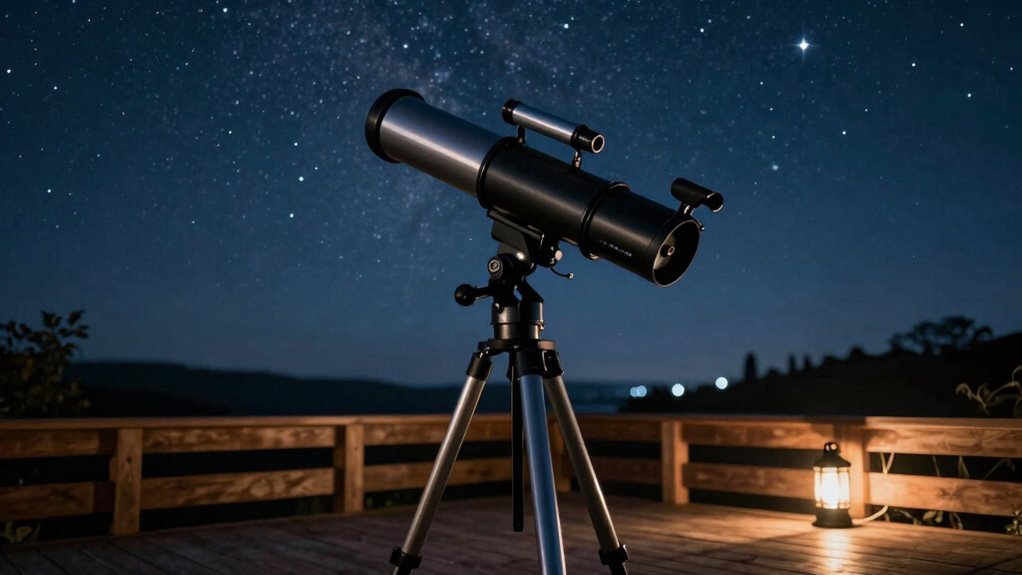

Choosing the right beginner telescope, like a lightweight refractor or small reflector, can make your backyard nights much more enjoyable. Look for a model that fits your budget, is easy to use, and portable enough for quick setups. Adding essential accessories like a sturdy tripod, star chart, and red flashlight will boost your experience. As you progress, consider upgrades like filters and thermal imagers. Keep exploring—there’s more to discover for a truly memorable stargazing journey.

Get the latest gadgets delivered free — and shop member deals
- Fast, free delivery on millions of items
- Access to Prime Big Deal Days deals on October 6–7
- Prime Video, Amazon Music and more included
Key Takeaways
- Choose a beginner-friendly telescope like a refractor or small reflector for ease of use and portability.
- Invest in essential accessories such as a sturdy tripod, collimation tool, and star chart to improve viewing quality.
- Prioritize simplicity and reliability in your initial setup to maximize enjoyment and confidence.
- Gradually upgrade with filters and advanced tools as your skills and interests grow.
- Use apps or star charts to quickly locate celestial objects, making every backyard night an exciting discovery.
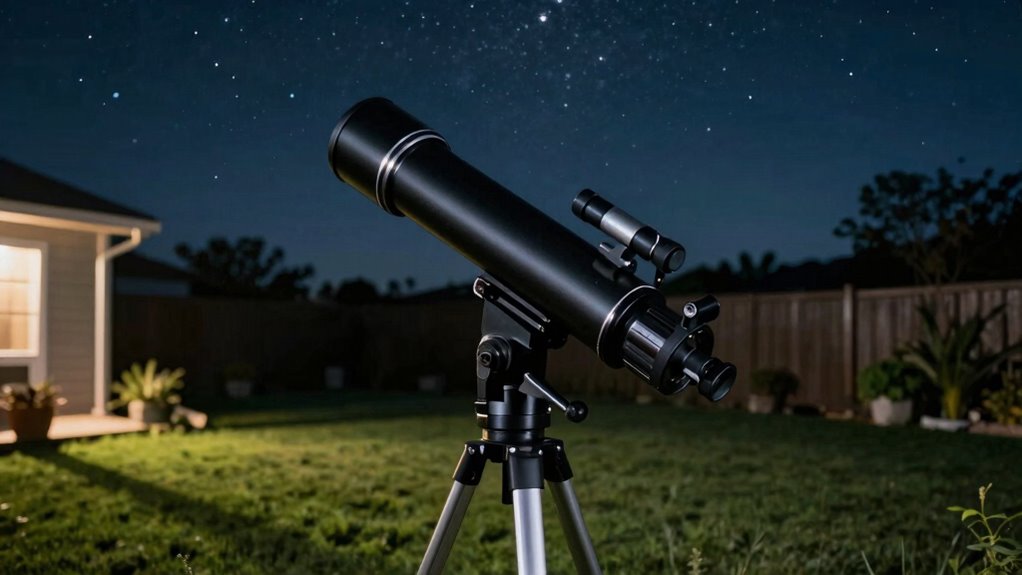
Are you ready to explore the stars? Choosing the right telescope can transform your backyard nights into memorable adventures. When starting with beginner astronomy, it’s tempting to get overwhelmed by the sheer variety of options. That’s why selecting a telescope that fits your needs and budget is essential. But a good telescope isn’t just about the device itself; it’s about creating a complete experience, which includes the right stargazing accessories. These accessories can make your observations more enjoyable and less frustrating, especially for newcomers. A sturdy tripod, for example, provides stability so you can focus on the sky without shaky images. A collimation tool helps keep your telescope aligned, ensuring sharp views of planets and stars. A star chart or stargazing app guides your night sky exploration, making it easier to identify constellations and planets.
For beginner astronomy, it’s best to start with a telescope that offers ease of use and portability. Refractors and small reflectors are popular choices because they’re lightweight and straightforward to operate. Once you’ve chosen your telescope, investing in some quality accessories can greatly enhance your experience. Think about a comfortable, adjustable tripod that allows you to easily find and track objects in the sky. A red flashlight is perfect for night viewing without ruining your night vision, and a carrying case helps protect your equipment during transport or storage. Additionally, understanding the basics of star navigation can help you quickly locate celestial objects with confidence. Having some knowledge about biodiversity and how celestial bodies are part of the larger universe can deepen your appreciation for the night sky and make your stargazing sessions more meaningful. Learning about astronomical phenomena can also inspire you to learn more about the universe’s mysteries and beauty. Incorporating sky observation techniques into your practice can further improve your ability to find and enjoy celestial objects. Exploring the importance of proper equipment maintenance ensures your telescope remains in good condition for many clear nights to come.
As you grow more confident, you might want to add more advanced stargazing accessories like filters to see details on planets or a thermal imager for more precise observations. However, in the beginning, focus on the basics. With the right starter gear, including a good telescope and essential accessories, your backyard nights become a mesmerizing window to the universe. You’ll find that every clear evening offers a new discovery, whether it’s a distant galaxy or a shining planet. The key is to keep it simple, enjoy the process, and gradually build your collection of tools as your passion and skills grow. Your backyard can become your personal observatory, turning ordinary nights into extraordinary journeys through the cosmos.
beginner telescope refractor small reflector
As an affiliate, we earn on qualifying purchases.
As an affiliate, we earn on qualifying purchases.
Frequently Asked Questions
How Do I Choose the Right Telescope for Beginners?
To choose the right telescope for beginners, start by considering your interest in celestial navigation and whether you’d benefit from astronomical software. Opt for a model that’s easy to set up and use, like a refractor or a beginner-friendly reflector. Look for features like stable mounts and clear optics. Astronomical software can enhance your stargazing experience, helping you identify objects and plan your night sky viewing more effectively.
What Accessories Are Essential for Backyard Stargazing?
Imagine guiding your celestial journey with essential tools. A good star chart helps you master celestial navigation, making it easier to find planets and constellations. A sturdy mount or tripod keeps your telescope steady, ensuring clear views. Consider a red flashlight for night vision and a lens cleaning kit to keep your view sharp. These accessories turn backyard stargazing into a more immersive, enjoyable experience, helping you explore the night sky confidently.
How Much Should I Budget for a Quality Telescope?
You should budget around $300 to $1,000 for a quality telescope, depending on your stargazing goals. Keep in mind, practicing proper stargazing etiquette means being considerate of others and minimizing light pollution. Also, budget extra for telescope cleaning supplies, like lens cloths and cleaning solutions, to keep your equipment in top shape. A good investment guarantees clear views and a more enjoyable experience under the night sky.
Can I Use a Telescope During the Day?
Yes, you can use a telescope during the day for solar observation and daytime viewing. Just make certain you have a proper solar filter to protect your eyes and the telescope from intense sunlight. Daytime viewing allows you to observe things like distant landscapes or bright objects, but avoid looking directly at the sun without the right filters. Using your telescope during the day can be both fun and educational.
How Do I Properly Maintain and Store My Telescope?
To keep your telescope performing at its best, gentle lens cleaning is essential—use a soft brush or microfiber cloth to remove dust without scratches. Store it in a cool, dry place to prevent moisture buildup. Regularly check and perform alignment calibration to ensure sharp images. Cover your telescope when not in use to protect it from dust and accidental bumps, prolonging its lifespan and maintaining ideal viewing quality.
As an affiliate, we earn on qualifying purchases.
Conclusion
Investing in the right telescope transforms your backyard into a personal planetarium, making every night an adventure. Did you know that over 60% of amateur astronomers say their equipment has deepened their appreciation for the cosmos? With the right gear, you’ll uncover stunning celestial sights and create unforgettable memories. So, go ahead—make that purchase and turn ordinary nights into extraordinary journeys through the stars. Your backyard is waiting to become your new universe.
As an affiliate, we earn on qualifying purchases.
As an affiliate, we earn on qualifying purchases.
Fall Picks
fall essentials
As an affiliate, we earn on qualifying purchases.