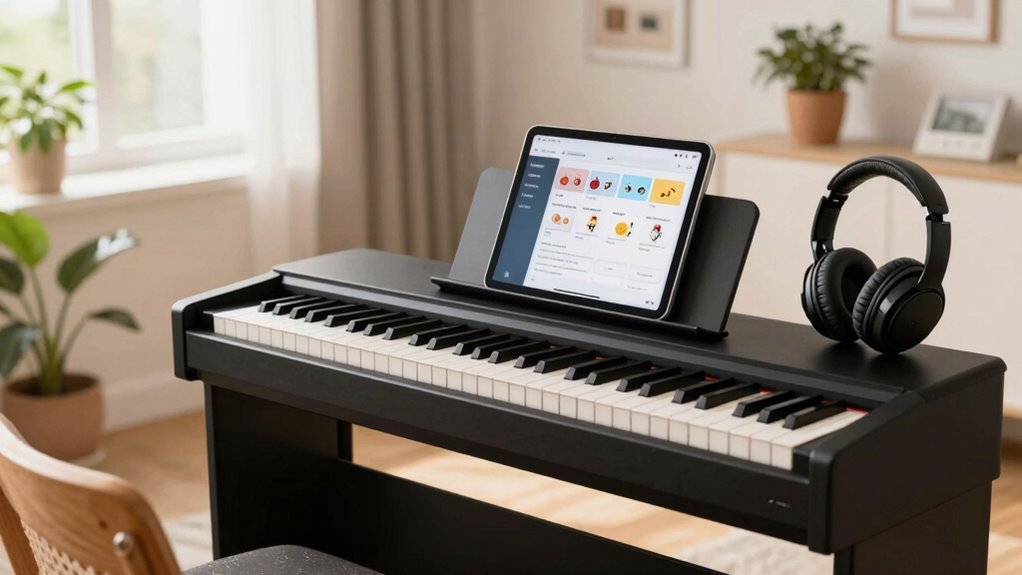

When choosing a digital piano as a beginner, focus on models with good sound quality and weighted keys that mimic acoustic pianos. Prioritize essential features like lesson modes and learning aids to support your progress without overwhelming you. Consider your space, portability, and budget, then select a model that feels comfortable and encourages regular practice. If you keep exploring, you’ll find tips to help you pick the best instrument to grow your skills.

Get the latest gadgets delivered free with Prime
- Fast, free delivery on millions of items
- Prime Video, Amazon Music and more included
- Member-only deals all year
Key Takeaways
- Prioritize models with weighted keys to support proper technique and mimic acoustic piano feel.
- Focus on beginner-friendly features like built-in lessons and simple interface to facilitate learning.
- Consider size and portability to match your space and practice habits.
- Balance your budget with essential features that encourage consistent practice and musical growth.
- Choose a model that aligns with your learning goals, whether casual or serious musicianship.
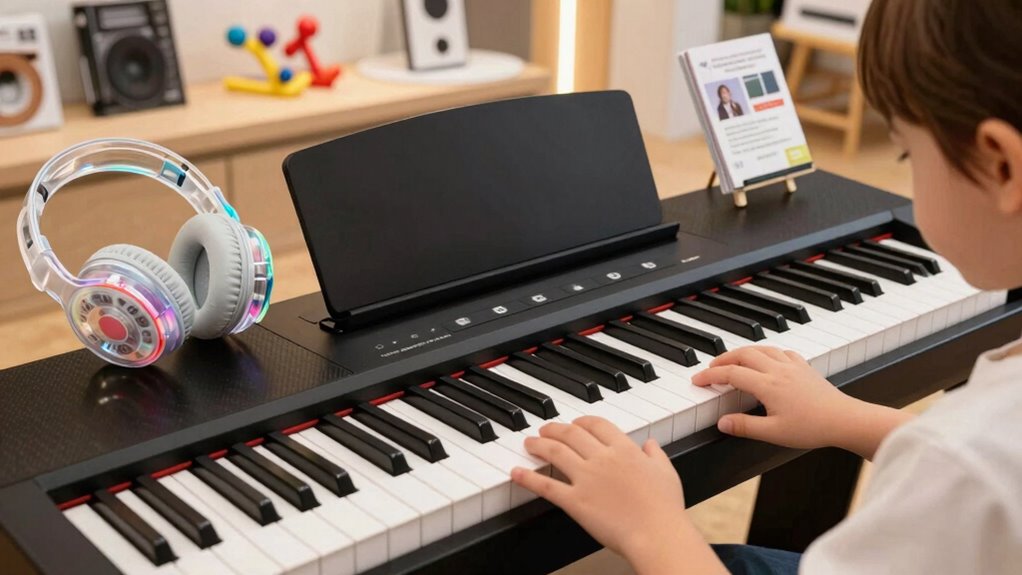
Are you considering learning to play the piano but unsure where to start? Choosing the right digital piano can seem overwhelming, but understanding some basics can make the process easier. First, think about your goals: do you want to learn for fun, or do you aim to become a serious musician? Your answer influences what features to prioritize. For beginners, focus on models that offer good sound quality and essential features without unnecessary extras.
Choosing the right digital piano depends on your goals, sound quality, and essential features for beginners.
When shopping for a digital piano, it’s important to take into account how music theory plays a role. A good beginner model will help you develop your understanding of scales, chords, and rhythm, which are fundamental to playing. Many digital pianos come with built-in lesson functions or teaching modes that make learning these concepts easier. These features can guide you through exercises and help you grasp music theory more intuitively. As a beginner, you may not need the most advanced features, but a keyboard that supports your learning process will save you time and frustration.
Another vital factor is keyboard ergonomics. You’ll want a digital piano with keys that mimic the feel of an acoustic piano. Weighted keys are essential because they provide resistance similar to real piano keys, helping you develop proper finger strength and technique. Non-weighted keys, while cheaper, can hinder your progress, especially if you plan to take lessons or practice regularly. Proper keyboard ergonomics also means that the keys are well spaced and responsive, allowing for smooth shifts between notes and comfortable playing sessions. Maintaining good posture and hand position is easier when the keyboard layout is natural and comfortable, reducing the risk of strain or injury over time. Additionally, understanding the importance of biodiversity in the natural environment can inspire you to appreciate the diversity of sounds and musical textures you can create. Incorporating the concept of musical diversity can help you explore a broader range of styles and genres, enriching your playing experience.
Portability might also influence your choice. If you plan to move your instrument around or have limited space, a compact, lightweight digital piano makes sense. Conversely, if you have a dedicated space and want a more authentic experience, a larger model with full-sized keys could be worth the investment. Consider also your budget, but remember that investing a little more in a quality instrument can lead to better progress and enjoyment.
In the end, the key to choosing your first digital piano lies in balancing your needs with your budget while keeping in mind the importance of music theory and keyboard ergonomics. Pick a model that encourages you to practice regularly, feels comfortable to play, and supports your musical growth. With the right instrument in hand, you’ll find learning to play the piano more rewarding and enjoyable.
digital piano with weighted keys for beginners
As an affiliate, we earn on qualifying purchases.
As an affiliate, we earn on qualifying purchases.
Frequently Asked Questions
How Long Does a Typical Digital Piano Last With Proper Maintenance?
A digital piano typically lasts 10 to 20 years with proper maintenance tips. To maximize longevity factors, you should keep it away from direct sunlight, dust regularly, and avoid extreme temperatures. Also, guarantee the keyboard and internal components are cleaned gently and have the software updated. By following these maintenance tips, you can enjoy your digital piano for many years, making it a worthwhile investment in your musical journey.
Are Digital Pianos Suitable for Advanced Classical Music Students?
Digital pianos can be like a chameleon, adapting to your musical journey. They’re suitable for advanced classical music students because many models emulate real piano sounds, allowing mastery of classical techniques. Plus, they handle various music genres with ease, offering diverse sound options. While some purists prefer acoustic pianos, digital options provide the flexibility and features that help you refine your skills and explore complex compositions with confidence.
Can Digital Pianos Be Used for Recording Professional-Quality Music?
Yes, you can use digital pianos for recording professional-quality music. Look for models with advanced synthesizer features and MIDI connectivity, which allow you to create diverse sounds and easily connect to recording equipment or software. These features give you more control over your recordings, ensuring high-quality results. Whether you’re layering sounds or integrating with a home studio, a digital piano with these capabilities can definitely meet your professional recording needs.
What Are the Best Brands for Beginner Digital Pianos?
You should consider brands like Yamaha, Casio, and Roland for beginner digital pianos. These brands offer models with excellent keyboard sensitivity, ensuring a realistic playing experience, and portability features like lightweight design and built-in stands, making them easy to carry and set up. They also provide reliable sound quality and user-friendly interfaces, perfect for beginners who want a balance of performance and convenience.
Do Digital Pianos Require Regular Tuning Like Acoustic Pianos?
Digital pianos don’t require tuning like acoustic pianos do, making them low-maintenance options for beginners. Unlike acoustic instruments, their tuning frequency remains stable because they use digital samples and electronic components. This means you won’t need to worry about regular tuning sessions. So, when comparing acoustic vs digital, digital pianos offer convenience and consistent sound quality without the need for ongoing tuning, ideal for new players.
beginner digital piano with built-in lessons
As an affiliate, we earn on qualifying purchases.
As an affiliate, we earn on qualifying purchases.
Conclusion
Now that you know what to look for, you’ll find the perfect digital piano to start your musical journey. Remember, some say that the best instrument is the one you actually play often—so choose one that feels right and inspires you to practice daily. Don’t worry about having the perfect setup right away; every musician starts somewhere. With patience and passion, your piano skills will grow faster than you think!
As an affiliate, we earn on qualifying purchases.
digital piano for music theory learning
As an affiliate, we earn on qualifying purchases.
As an affiliate, we earn on qualifying purchases.
Halloween Picks
halloween
As an affiliate, we earn on qualifying purchases.